-
Pest Control
More than 50 employees at your service in all branches.
Get a free inspection -
Pest Library
More than 50 employees at your service in all branches.
Explore Our Pest Library
Pavement Ants
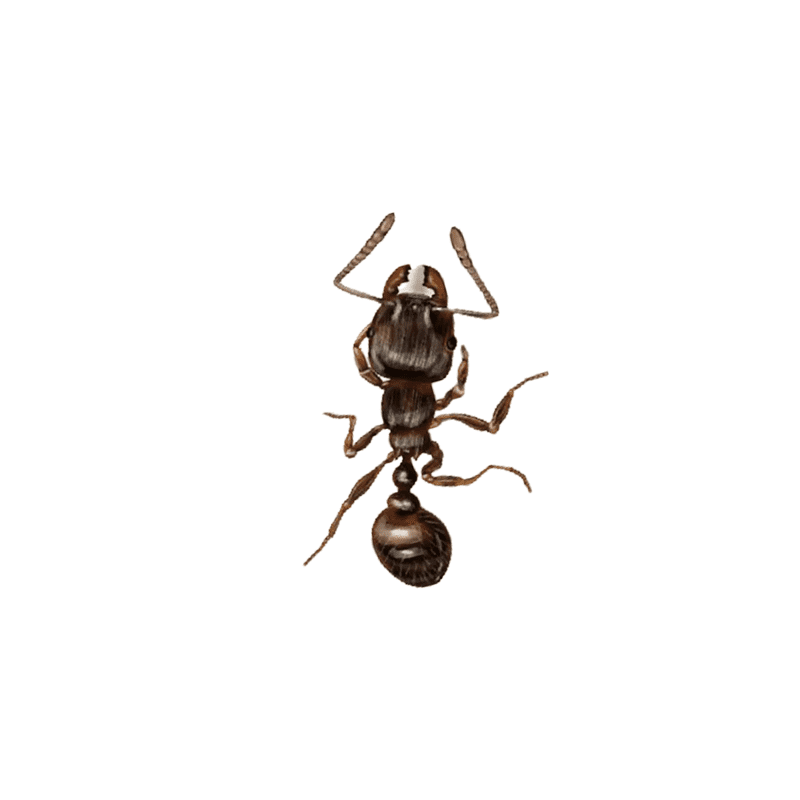
The Color
Pale brown to black
The Size
From 2.5 mm to 3 mm long
The Description
Pavement ants can build large colonies of up to tens of thousands of workers, usually with one or several queens, under paving and foundations. In warm months, winged males and young queens leave the nest to mate and start new colonies.
Quick links
Pavement ants are small, dark brown to black ants that get their name from their habit of nesting under pavements, paving slabs, patios and building foundations. They are one of the most common ants around homes and often come indoors looking for food.
They are not dangerous, but they contaminate food, build long trails across kitchens and floors, and can sting or bite when disturbed, although this is rarely serious.
What do pavement ants look like?
Workers are about 2.5 to 3 mm long and range from pale brown to black, with lighter legs. Up close you can see fine parallel grooves on the head and thorax, and two small spines on the back of the thorax.
Where are they found?
Pavement ants nest in soil under stones, paving, concrete slabs and foundations, and along kerbs and garden edges. The clearest sign of a nest is small piles of fine soil or sand pushed up through cracks in pavements and floors. Indoors they nest in wall voids, under floors and near heating or water pipes.
What do they eat?
Pavement ants eat almost anything: sweets, bread, meat, grease, seeds, dead insects and honeydew. Food spills, crumbs, pet food and open bins draw them indoors.
Colony and life cycle
A colony can grow to tens of thousands of workers with one or several queens. Each ant goes through four stages: egg, larva, pupa and adult. In warm months, mature colonies release winged males and females that swarm to mate and start new colonies. Neighbouring colonies sometimes fight, leaving large numbers of dead ants on pavements.
Signs of a pavement ant infestation
- Small piles of sand or soil next to cracks in paving or floors
- Trails of small dark ants along walls, skirting boards and kitchen counters
- Winged ants appearing indoors in warm weather
- Ants gathered around pet bowls, bins and food spills
How to keep pavement ants away
Seal cracks in floors, walls and around pipes, clean up crumbs and spills straight away, keep food in airtight containers and empty bins regularly. Fixing leaks and keeping the area around the house dry also makes it less attractive.
Pavement ant control
Spraying the trail only kills the workers you see, while the nest under the slab keeps producing more. Safeguard’s technicians trace the trails back to the nest, treat it with approved baits and products that reach the queen, and follow up to make sure the problem is solved. Call 0563005016 or message us on WhatsApp to book a free inspection.

What do customers say about Safeguard pest control?
Safeguard Pest Control is rated out of 5 based on 40 reviews as of November 2021.
All customer reviews on Google
100% money back guarantee
Solving the pest problem is our #1 priority. If re-treatment is required, we will provide immediate services at no additional cost. If your expectations are not met, we guarantee a full refund of your service payment.