-
Pest Control
More than 50 employees at your service in all branches.
Get a free inspection -
Pest Library
More than 50 employees at your service in all branches.
Explore Our Pest Library
Carpenter Ants
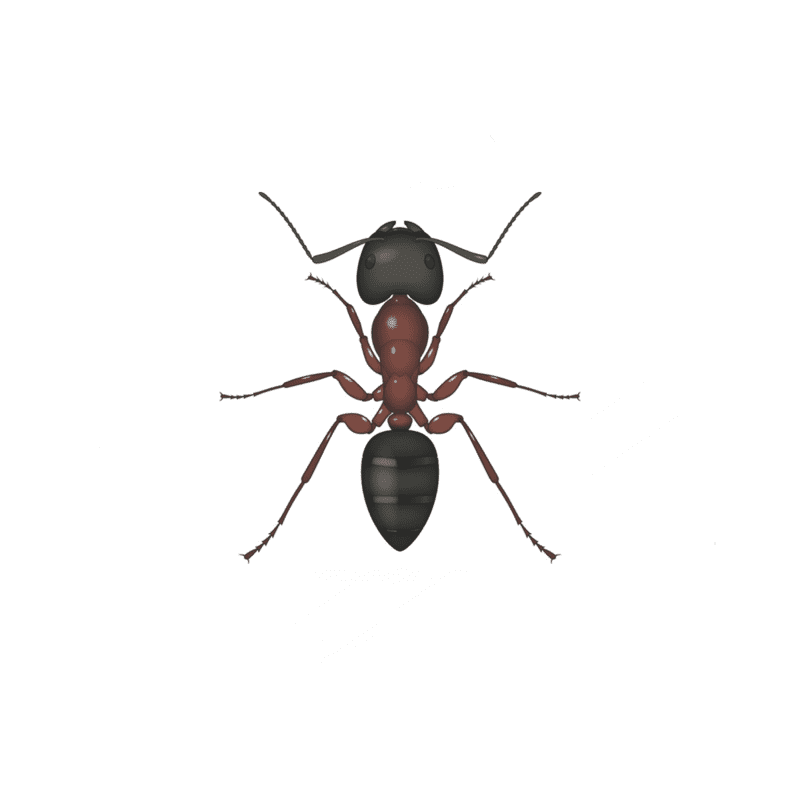
The Color
Black, reddish or a mix of both
The Size
Workers 6 to 13 mm long; queens up to 25 mm, several times larger than common house ants.
The Description
Carpenter ants have six legs, a single narrow node connecting the abdomen to the thorax, and a smooth, evenly rounded thorax.
Quick links
Carpenter ants are among the largest ants found around homes. They get their name from the way they carve tunnels and galleries inside wood to build their nests. Unlike termites they do not eat wood, but their tunnelling can weaken doors, window frames, roofs and other wooden structures over time.
They are most active at night, when workers leave the nest to look for food, so an infestation can go unnoticed for a long time.
What do carpenter ants look like?
Workers range from about 6 to 13 mm long, and queens can reach 25 mm. Most are black, reddish or a mix of both. They have a single node between the thorax and abdomen and a smooth, evenly rounded back.
Where are they found?
Carpenter ants prefer damp or damaged wood: around leaking roofs, bathrooms, kitchens, window and door frames, wooden decks and old trees near the house. A main colony may live outdoors while satellite nests form inside walls, ceilings and hollow doors.
What do they eat?
They feed on honeydew from aphids, plant juices, sugary foods, meat, grease and other insects. Indoors they are drawn to sweets, pet food and kitchen waste.
Colony and life cycle
Each colony is started by a single queen and can take several years to mature, eventually reaching thousands of workers. The ants develop through four stages: egg, larva, pupa and adult. Mature colonies release winged males and females that swarm to mate and start new nests.
Signs of a carpenter ant infestation
- Small piles of fine wood shavings, like sawdust, mixed with insect parts near wooden structures
- Large black or reddish ants indoors, especially at night
- Winged ants appearing inside the house
- A faint rustling sound inside walls or wooden surfaces
- Wood that sounds hollow when tapped
Are carpenter ants dangerous?
They do not spread disease and rarely bite people, although their bite can be painful. The real risk is to the building: a large, long-established colony can cause costly structural damage, especially in wood that is already damp.
How to prevent carpenter ants
Fix leaks and replace damp or decayed wood, keep firewood and wooden materials away from the walls, trim branches that touch the house, seal gaps around pipes and cables, and keep food stored and bins closed.
Carpenter ant control
Carpenter ants are hard to eliminate because the main nest and its satellite nests are often hidden inside walls or outdoors. Safeguard’s licensed technicians track the ant trails back to the nests, place baits along them and treat the nesting areas, then follow up to make sure the colony is gone. Call 0563005016 or message us on WhatsApp to book a free inspection.

What do customers say about Safeguard pest control?
Safeguard Pest Control is rated out of 5 based on 40 reviews as of November 2021.
All customer reviews on Google
100% money back guarantee
Solving the pest problem is our #1 priority. If re-treatment is required, we will provide immediate services at no additional cost. If your expectations are not met, we guarantee a full refund of your service payment.