-
Pest Control
More than 50 employees at your service in all branches.
Get a Free Inspection -
Pest Library
More than 50 employees at your service in all branches.
Explore Our Pest Library
Field Ants
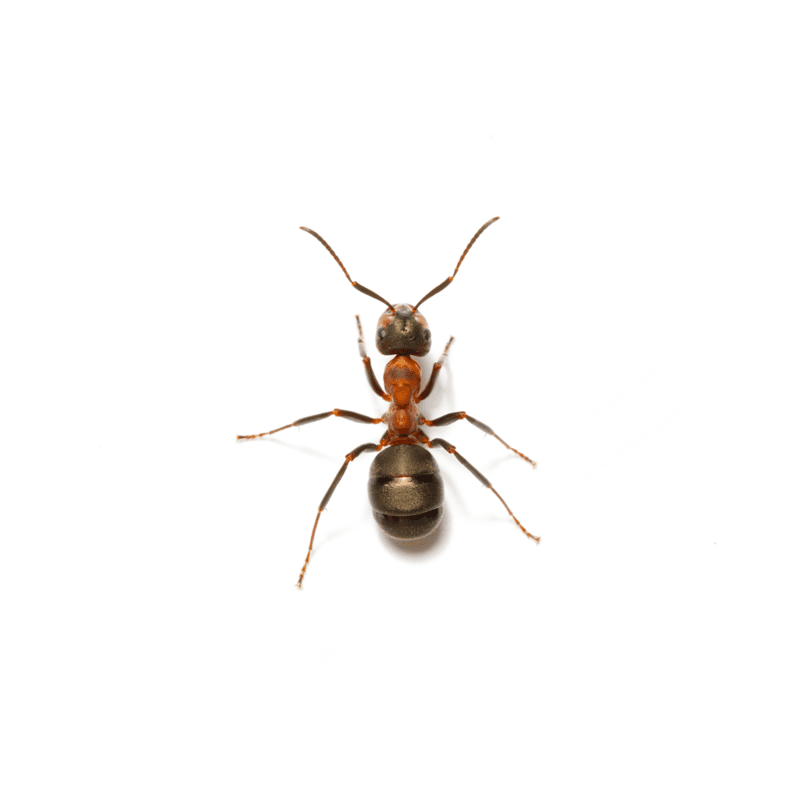
The Color
Field ants vary in color, combining yellow, red and black or bicolored red-and-black; adults may be pale yellow, reddish-brown, black or a mix of colors
The Size
Field ants range from 3 to 10 mm in size
The Description
Field ants are among the most widespread ants in the world, with more than 150 species. They feed mainly on honeydew, a sweet substance produced by insects such as mealybugs and aphids. Because there are so many species, few generalizations can be made, but they tend to build their colonies in the ground near trees, fences, pavements and rocks, and some species use leaves, stems and pine needles to build their nests.
Field ants (genus Formica) are among the most diverse ant groups in the world, with more than 150 species. They are also known as mound ants, wood ants and thatching ants. They feed mainly on a sweet substance called honeydew and build their nests outdoors, often as mounds of soil in lawns and gardens. Some species prefer to nest under woodpiles, bricks, landscaping features, trees and rocks.
What Do Field Ants Look Like?
Field ant workers range from about 4 to 8 mm long, and their color varies by species. Black field ants are the most common, but red, brown, red-and-black and golden-yellow species can also be found around homes and buildings. They rarely come indoors but are often seen crawling on porches, foundations and patios.
Because of their size, field ants are often mistaken for carpenter ants. Unlike carpenter ants, they build mounds in open areas such as lawns and do not nest inside homes, although they may come inside to forage. Mounds built close to the foundation can give them easier access to the house.
Where Do Field Ants Live?
Field ants leave visible mounds in open areas such as lawns, where they build their nests. These mounds are usually made of plant material such as grass, twigs, leaves and pine needles. Field ants often nest around small trees, shrubs, rocks or fences, and some species nest in pavement cracks, along foundation walls or at the base of trees.
What Do Field Ants Eat?
Field ants feed mainly on honeydew, a sugary substance produced by sap-feeding insects such as aphids, mealybugs and scale insects on trees and shrubs. Some species are also attracted to meat. Field ants can become a nuisance from late summer into autumn, when winged ants leave the colony to mate. Each colony has a queen that lays eggs, which develop into workers.
Do Field Ants Bite?
Although they are generally not aggressive, field ants will bite if disturbed. Their bites can be painful, and some species spray formic acid into the wound. The pain fades quickly, and the bites have no long-term effects.
How Dangerous Are Field Ants?
Field ant mounds can be three to four feet wide and up to two feet tall. Large nests can damage lawns and landscaping, and the queen is usually hidden deep underground, which makes the colony hard to eliminate. Control methods include liquid insecticide treatments and granular baits.
Signs of a Field Ant Infestation
Field ants rarely invade homes, but they can build large nests in fields and lawns. Mounds along walkways can be unsightly, and because many species can spray formic acid when threatened, contact with them is best avoided.
How to Get Rid of Field Ants
Correctly identifying the ant species is essential for effective treatment, since field ants are often confused with carpenter ants. If in doubt, consult a pest control professional. For nests of moderate size, sealing cracks in the foundation and walls is usually enough to keep foraging ants out.
- Check window sills and all electrical and utility lines entering the home.
- Avoid using mulch right next to the foundation, as it attracts nesting ants.
- If a nest grows very large, it may need professional insecticide treatment that fully saturates the colony.
Prevention Tips
- Look for and remove items that ants could use as nesting sites.
- Store firewood on racks off the ground and away from the house.
- Move mulch away from the foundation to discourage nesting.
- Make sure exterior doors close tightly.
For persistent ant problems, Safeguard’s ant control service treats the colony at its source.

What do customers say about Safeguard pest control?
Safeguard Pest Control is rated out of 5 based on 40 reviews as of November 2021.
All customer reviews on Google
100% money back guarantee
Solving the pest problem is our #1 priority. If re-treatment is required, we will provide immediate services at no additional cost. If your expectations are not met, we guarantee a full refund of your service payment.