-
Pest Control
With more than 8000 technicians, we are ready to protect your home.
Get a Free Inspection -
Pest Library
With more than 8000 technicians, we are ready to protect your home.
Explore Our Pest Library
Long-Horned Beetle
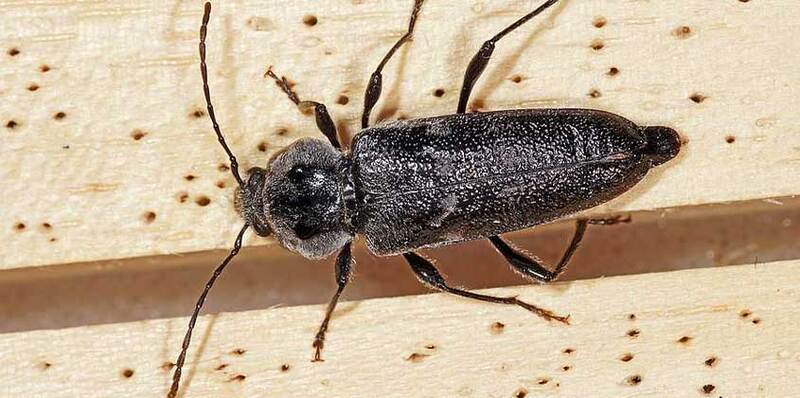
The Color
The Size
The Description
Quick links
The old house borer is a type of long-horned beetle (family Cerambycidae) and one of the most destructive wood-boring insects. Females lay their eggs in cracks and crevices in wood, including stored lumber and furniture. Despite its name, it is often found in newer homes. The larvae live inside the wood, feeding on it for several years before emerging as adults, and you may hear a clicking or ticking sound as they chew. Adults appear in summer to mate and lay eggs in wood, and the larvae feed mainly on softwoods such as pine and spruce. Infestations often start in one area of the home but can spread and cause serious damage in a relatively short time, so they should be dealt with quickly.
What Does an Old House Borer Look Like?
These beetles have long antennae and are gray to black, measuring about 1/2 to 3/4 inch long, with patches of grayish hair on the wings and thorax. The larvae are creamy white, worm-like and can grow well over half an inch long. The front of the larva is slightly wider than the rear, with three small eyes on each side of the head.
Where Do Old House Borers Live?
Old house borers are found worldwide and attack softwood inside the home, especially in framing, damp areas, storage spaces and basements. The larvae feed on softwoods, and the damage tends to be greater in newer wood, which contains more nutrients, while older wood is less suitable for them.
Old House Borer Life Cycle
Females lay eggs in cracks in the wood. After hatching, the larvae bore into the wood, where they can live for several years, feeding more actively as temperatures rise. Because structural timbers in homes warm up quickly, they can suffer significant damage. The larvae eventually pupate and emerge as adults, which begin breeding soon after, repeating the cycle.
What Damage Do Old House Borers Cause?
Old house borers do not pose a direct health risk to people, but they can cause significant damage to the structure of homes and buildings. The larvae feed heavily on wood and leave oval exit holes about 6–10 mm wide in timber and wooden furniture.
Signs of an Old House Borer Infestation
Infestations are hard to detect because the larvae live hidden inside the wood. Warning signs include tunnels in the wood, clicking or chewing sounds, fine powdery frass and oval exit holes where adult beetles have emerged.
How to Prevent Old House Borers
- Keep wood in your home dry and free from moisture problems.
- Remove infested or damp wood promptly before the problem spreads.
- Inspect wooden structures regularly, since borers can remain hidden for years; early detection makes treatment much easier.
- Seal or varnish wood surfaces to help protect them.
- Ventilate your home well, especially during the spring and summer mating season.
Home remedies are rarely effective against wood borers. For a lasting solution, Safeguard’s beetle and wood borer experts can identify the species, find the source of the infestation and design a treatment program that fits your home and budget.

What do customers say about Safeguard pest control?
Safeguard Pest Control is rated out of 5 based on 40 reviews as of November 2021.
All customer reviews on Google
100% money back guarantee
Solving the pest problem is our #1 priority. If re-treatment is required, we will provide immediate services at no additional cost. If your expectations are not met, we guarantee a full refund of your service payment.