-
Pest Control
More than 50 employees at your service in all branches.
Get a free inspection -
Pest Library
More than 50 employees at your service in all branches.
Explore Our Pest Library
Fire Ants
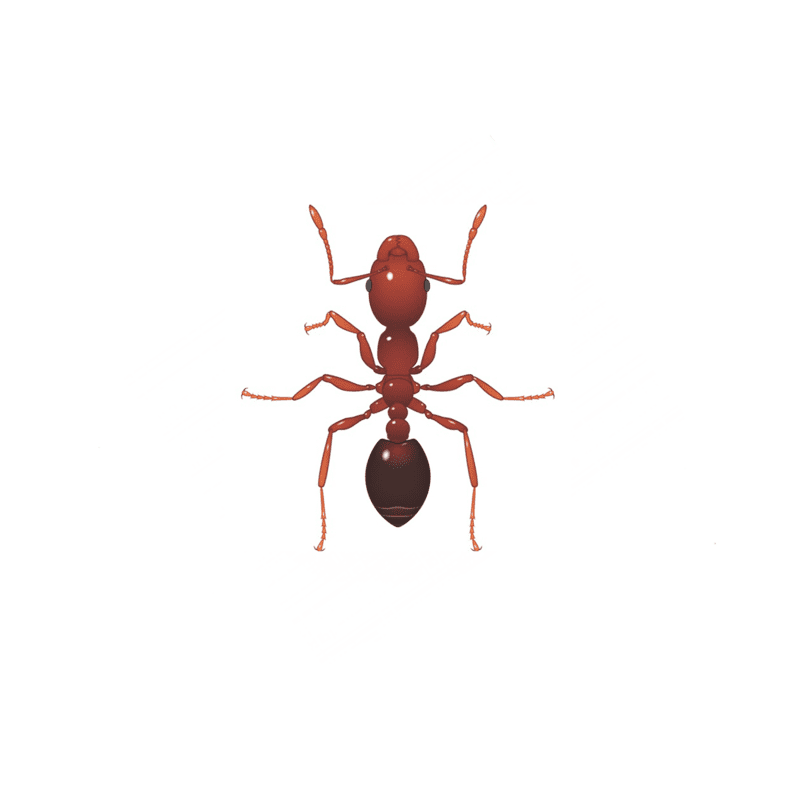
The Color
Reddish hue in shades ranging from medium to black.
The Size
Worker ants from 2 mm to 6 mm; queens can be up to 25 mm long.
The Description
Fire ants have two small segments or nodes between the thorax and abdomen, and a two-segmented club at the end of each antenna.
Quick links
Fire ants are aggressive, reddish-brown ants best known for their painful sting. They forage for sweet plant secretions, seeds, food scraps and rubbish, and they also hunt insects and small animals to feed the colony. Disturb a nest and hundreds of workers swarm out to defend it.
A fire ant grips the skin with its jaws and then stings repeatedly. The venom causes a burning pain followed by an itchy white pustule, and in some people it can trigger an allergic reaction.
Where are fire ants found?
Fire ants nest in soil, usually in sunny, open areas such as gardens, lawns, yards, school grounds and the edges of pavements. Nests often appear as loose mounds of soil with no visible entrance hole. They also nest under stones, paving slabs and wood, and they sometimes enter buildings through cracks, especially near electrical boxes and air-conditioning units.
What do they eat?
Fire ants eat almost anything: other insects, seeds, honeydew from aphids, sugary foods, proteins and greasy food. Inside homes they are drawn to food spills and pet food.
Life cycle
Fire ants develop through four stages: egg, larva, pupa and adult. A queen can lay hundreds of eggs a day, and workers develop from egg to adult in about 3 to 6 weeks depending on temperature. Mature colonies can hold tens of thousands of workers, and some have more than one queen.
The colony and the queen
Workers are sterile females that build and defend the nest, forage and care for the young. When a colony grows large, it produces winged males and females that leave the nest in a mating flight, often after rain. After mating, the males die and each new queen sheds her wings and starts a new colony in the soil.
Why do I have fire ants?
Fire ants are attracted to warm, sunny soil with easy access to food and water. Irrigated gardens, leaking taps, outdoor food waste and pet food all encourage them to settle near homes.
How worried should I be about fire ants?
Fire ants are a real concern for families with children, elderly people and pets, because one disturbance can lead to many stings at once. Anyone who is allergic to insect stings should get medical help immediately if stung.
Signs of a fire ant infestation
- Mounds of loose soil in the garden or lawn, especially after rain
- Aggressive ants swarming out when the soil is disturbed
- Painful stings that leave itchy white pustules
- Ant trails near kitchens, bins or pet bowls
The nest
Nests are built in soil and can run deep underground. The visible mound may be only a few centimetres high, but the tunnels underneath spread widely, so treating only the surface rarely solves the problem.
What happens if a fire ant stings you?
A fire ant sting causes a sharp, burning pain, followed by swelling and a small white pustule within a day. Wash the area with soap and water, apply a cold compress and avoid scratching the blister to prevent infection. Get medical help straight away if you notice difficulty breathing, swelling of the face or throat, or dizziness.
Fire ant control
Shop-bought sprays usually kill only the ants you can see, while the queen survives and the colony recovers. Safeguard’s technicians locate the nests, treat them with approved baits and products that reach the queen, and follow up to make sure the colony is gone. Call 0563005016 or message us on WhatsApp to book a free inspection.

What do customers say about Safeguard pest control?
Safeguard Pest Control is rated out of 5 based on 40 reviews as of November 2021.
All customer reviews on Google
100% money back guarantee
Solving the pest problem is our #1 priority. If re-treatment is required, we will provide immediate services at no additional cost. If your expectations are not met, we guarantee a full refund of your service payment.